Instrument Exhibition: Orchestra
ExhibitionSibelius Museum’s instrument collection is too vast to be exhibited in full in the museum. Instead, we pick themes of musical history to present through archival material and instruments in our changing exhibition.
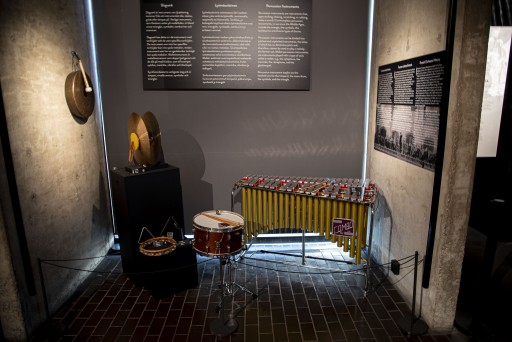
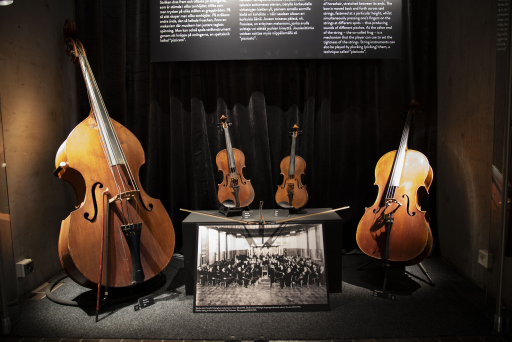
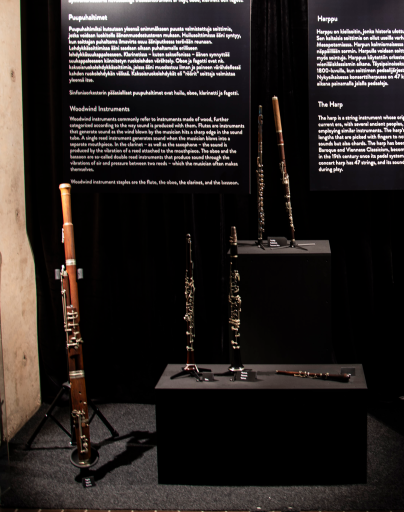
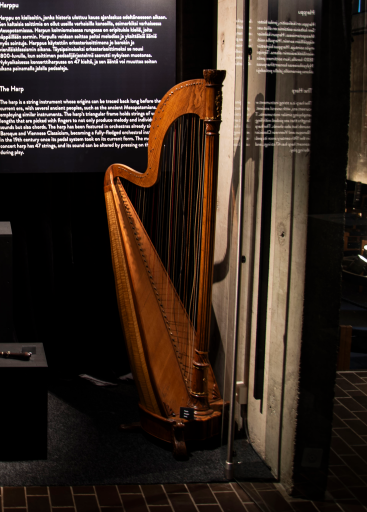
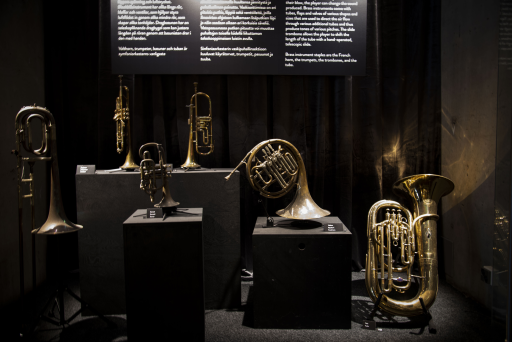
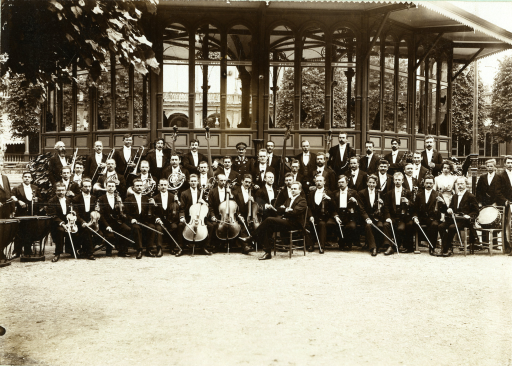
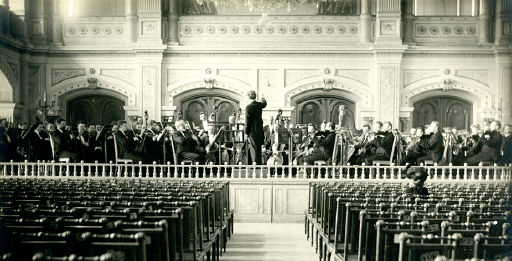
The current instrument exhibition presents the history of the orchestra from a European and, specifically, a Finnish perspective. In the exhibition, visitors will get to know different sorts of orchestras as well as instruments that are used, or have been used e.g. in a symphony orchestra. In the exhibition you can also put on a conductor’s tailcoat and try out how a baton feels in your hand!
Welcome to the Orchestra
‘Orchestra’ is derived from the Classical Greek orkhḗstrā (ὀρχήστρα), referring to the space reserved for the choir between the stage and the audience stands in the amphitheaters of Ancient Greece. Nowadays ‘orchestra’ refers to an ensemble of musicians. An orchestra’s composition varies depending on the piece; the composer determines the instruments included as well as the number of musicians. There are several standardized orchestral ensembles in western art music tradition.
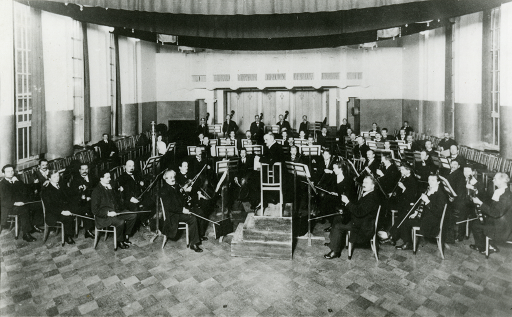
The largest ensemble by size is the symphony orchestra, whose core consists of string instruments, brass, woodwinds, and percussion – harp is often included as well. A symphony orchestra commonly comprises approximately 50 to 80 musicians, though full-size orchestras can surpass 100. Symphonic orchestras are also used for operas and ballets.
The chamber orchestra is a smaller ensemble that suits well i.e., the performance of Viennese classics.
The string orchestra is a smallish ensemble, consisting solely of stringed instruments, i.e., the violin, the viola, the cello, and the double bass.
The wind band is an orchestra consisting primarily of wind instruments – brass, for the most part – though percussion may also be included. Many army bands are wind bands. While not strictly named an orchestra in English, it is named as such in others.
Baroque orchestra is a historical term that refers to orchestras of the Baroque, of various regional variants that differed greatly in composition. In the present-day the term has become the established term for chamber orchestral compositions specialized in performing classical music according to earlier conventions. In baroque orchestra musicians often play period instruments, that is, replicas of instruments used at the time the musical piece was composed, to create as authentic of an experience possible.


Your feedback is important
Did you enjoy this information?